
DONATE TO SALT LAKE COUNTY SEARCH AND RESCUE
They give their time. You help make the response possible.
CHOOSE HOW YOU GIVE
Donate to support the volunteers who respond across Salt Lake County’s mountains, canyons, and backcountry. Choose PayPal or Venmo below to open the team’s donation account. Before completing your gift, review the recipient and donation amount, and keep the payment confirmation for your records.
For your donation records, the team’s Employer Identification Number (EIN) is 87-0473072.
PAYPAL
Give through SLCOSAR’s PayPal donation page.
VENMO
Find the team on Venmo: @slcosar.
ANOTHER WAY TO HELP?
For business partnerships, equipment contributions, or questions about giving, contact the team so we can discuss current needs.
Thank you for standing behind the people who answer the call.
VOLUNTEER DOESN’T MEAN COST-FREE
Salt Lake County Search and Rescue is an entirely volunteer team. Our members give their time to train, respond, and help people get home safely.
As a 501(c)(3) organization, the team relies on charitable donations to supplement county and state funding, supporting the essential day-to-day operations, training, and equipment expenses.
Long before a call comes in, readiness takes an investment. Your support helps keep that preparation moving forward.
WHAT YOUR SUPPORT MAKES POSSIBLE
Donations help meet the practical needs of a team that must be ready for difficult terrain, changing weather, and complex rescues.
RESCUE EQUIPMENT
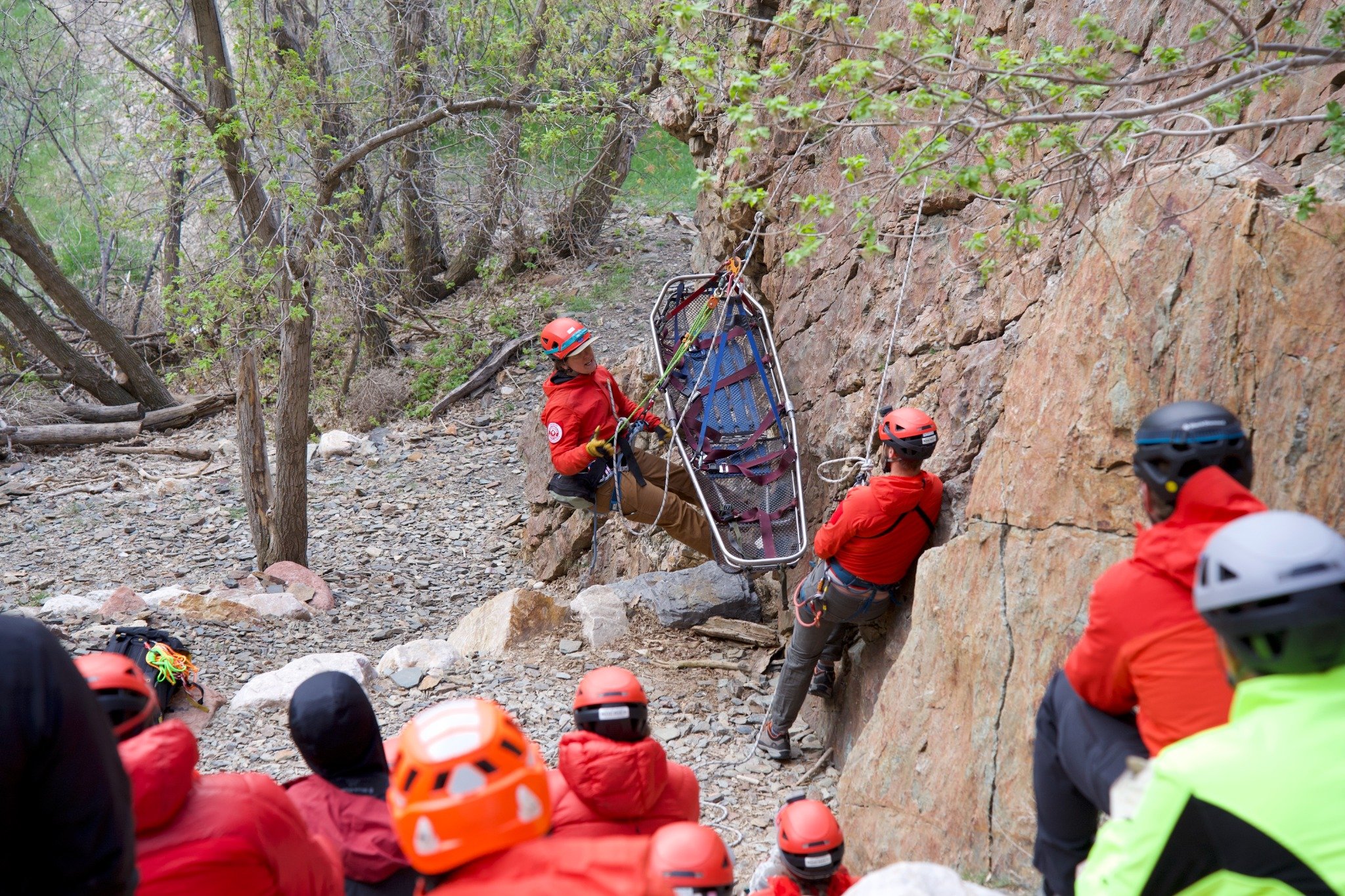
Maintaining and replacing ropes, harnesses, rescue litters, and other specialized gear used to reach and move people safely.
TRAINING & READINESS
Supporting hands-on training, practice, and continuing education so volunteers can work effectively together when it matters.
RESPONSE & OPERATIONS
Helping with the supplies, communications equipment, and maintenance that keep the team ready to respond.
These examples describe the kinds of needs your gift can support. Priorities change with equipment condition, training needs, and operational demands.