
Frequently asked questions
Know how to get help, what to expect, and how to support the people who answer the call.
Need emergency help? Call 9-1-1.Non-emergency dispatch: 801-840-4000
Call 9-1-1Find answers to common questions below. In an emergency, contact dispatch directly—our website and social media are not emergency reporting channels.
When you need us
How do I request search and rescue?
Call 9-1-1 for a search and rescue emergency. Explain what happened and where you are. Follow the dispatcher’s instructions and stay on the line until told to hang up. Do not use our website contact form or social media to request emergency help.
When should I call for help?
Call 9-1-1 when someone needs immediate help—for example, an injury, a dangerous situation, or being lost and unable to return safely. If you are unsure whether the situation is an emergency, explain it to the dispatcher so they can assess the need for assistance.
What information should I give the dispatcher?
- Start with your location, callback number, and what happened.
- Describe any injuries or symptoms.
- For a backcountry incident, share the trail or canyon name, your route, GPS coordinates if available, and how many people are with you.
- Answer questions as accurately as you can; say when you do not know.
For SLCOSAR, give latitude and longitude in decimal degrees when available. Read latitude first, then longitude, including every digit, decimal point, and minus sign. Confirm that the coordinates are for your current position and ask dispatch to read them back. Our guide explains how to find them in AllTrails and Google Maps.
what3words requires an extra conversion step for our team. If it is the only location reference you have, tell dispatch and read the three words exactly, in order. Do not delay calling 9-1-1 to install an app or convert coordinates; follow the dispatcher’s instructions.
What if I have limited or no cell service?
- Try calling 9-1-1.
- If a voice call will not connect, try texting 9-1-1; a text still needs a connection.
- If your phone or satellite communicator supports emergency SOS, use its emergency procedure.
- Learn those features before your trip.
- Do not assume that cell service will be available in the backcountry.
What should I do if I am lost or waiting for rescuers?
- Stop, stay calm, and avoid wandering farther.
- If your location is safe, stay there so rescuers are not searching for a moving target.
- Shelter from the weather, keep your group together, and follow dispatch instructions.
- Move only if staying puts you in immediate danger or responders direct you to move; tell dispatch about any change in location.
What if someone has not returned from a trip?
If you believe they may be lost, injured, or in danger, call 9-1-1 and explain your concern. Have their planned route, expected return time, last known contact, and any useful location information ready. Share updates with dispatch if you hear from them or they return.
What to expect
How quickly will rescuers reach me?
There is no single response time. Volunteers must mobilize, and reaching someone in steep or remote terrain takes time. Some missions continue overnight. Be prepared for a wait, protect yourself from the weather, and follow any updates or instructions from dispatch.
Will I be charged for a rescue?
Do not delay calling 9-1-1 because you are worried about cost. SLCOSAR does not charge for rescuing you. However, there is an exception for emergency response expenses when someone recklessly or intentionally creates the situation requiring a response.
If the county sheriff determines that a person acted recklessly or intentionally, that person may still be liable for response expenses, whether or not they purchased a USARA card.
What do these terms mean?
- Recklessly: A person acts recklessly when he or she engages in highly unreasonable conduct, involving extreme departure from ordinary care, in a situation where a high degree of danger is apparent.
- Intentionally: A person who intentionally takes actions to incur a SAR response is one who has done it purposefully or deliberately, not accidentally or involuntarily.
Search and rescue operations and medical services are separate. An ambulance, medical helicopter transport, hospital visit, or other medical care may involve charges from the provider.
Read the official USARA FAQ for more about response expenses and the program.
Do I need a Utah Search and Rescue Assistance card to get help?
No. You can request emergency help without a USARA card. Utah’s program helps fund county search and rescue efforts; it is not health insurance and does not cover your medical bills. Visit the official USARA FAQ for the current program terms, including reimbursement limits and exceptions.
Plan for the unexpected
What should I do before heading into the backcountry?
- Choose a route that matches your group’s abilities.
- Check weather, access, and terrain conditions.
- Leave your route and expected return time with someone you trust, and update them if plans change.
- Know when to turn around, stay together, and learn to use your navigation and emergency equipment before you need it.
What should I carry, even on a short hike?
- Bring navigation tools, a headlamp, extra food and water, layers, sun protection, first-aid supplies, and emergency shelter.
- Add repair tools and appropriate emergency gear for the terrain and season.
- Carry a charged phone, but do not depend on cell coverage.
- Pack for an unexpected delay or night outside, even if you plan to return before dark.
Meet SLCOSAR
Are your rescuers volunteers?
Yes. SLCOSAR is an all-volunteer team. Members give their time to train and respond while balancing jobs, families, and other responsibilities. They receive no monetary compensation for their service.
What kinds of emergencies does the team handle?
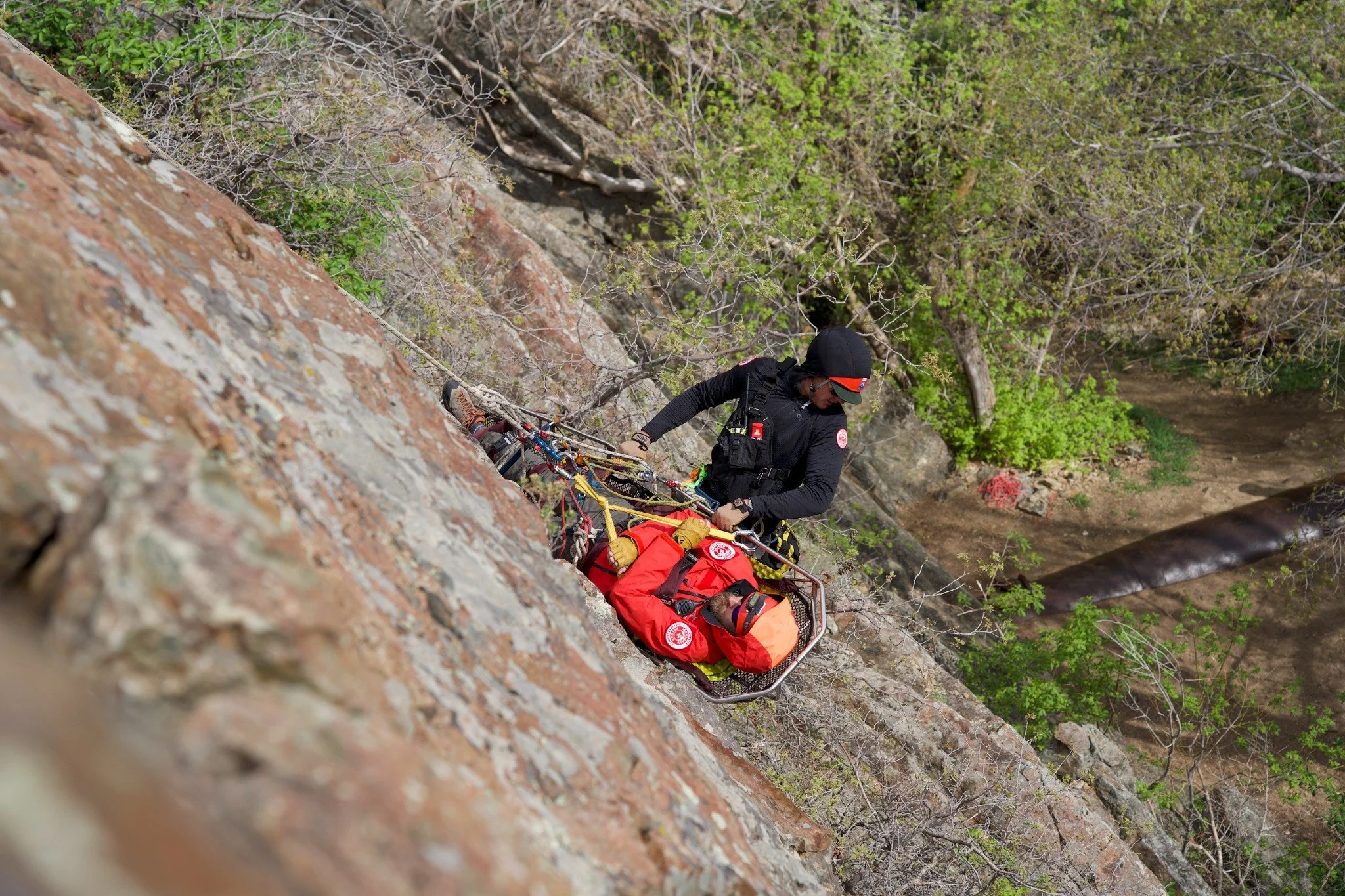
Our work includes lost-person searches, mountain and high-angle rescues, wilderness patient care and evacuation, avalanche response, water rescues, and other incidents requiring specialized skills. The team trains across multiple disciplines to work in difficult terrain and changing conditions.
Where does SLCOSAR respond?
SLCOSAR serves people who live, work, and explore in Salt Lake County. If you need emergency help, call 9-1-1 wherever you are—dispatch will determine the appropriate response. You do not need to identify the correct SAR team before calling.
Does the team train when there are no active rescues?
Yes. Readiness depends on regular practice, equipment preparation, and maintaining certifications. SLCOSAR members train with other agencies and develop skills in rescue systems, navigation, and patient care. That work continues between callouts.
Help make the response possible
How can I support the team?
Donate, share the team’s work, or explore a community partnership. Donations help support rescue equipment, training, communications, supplies, and maintenance. Visit our Donate page for the team’s PayPal and Venmo options, or our Support page for other ways to help.
Can I join the search and rescue team?
Applications are currently closed. Visit Get Involved for recruitment updates and the notification signup. A Wilderness First Responder (WFR) certification or higher is required to be considered. Members should be prepared for demanding outdoor conditions, ongoing training, and a substantial volunteer commitment.
Can my business donate equipment or partner with SLCOSAR?
Yes—please contact the team to discuss current needs before purchasing or delivering equipment. Rescue gear has specific requirements, and needs change with training and operations. We can discuss how your proposed contribution or partnership could help.
How do I contact the team with a non-emergency question?
Use our Contact page for general questions about the team, donations, or partnerships. For non-emergency dispatch, call 801-840-4000. For a search and rescue emergency, call 9-1-1.
Still have a question?
For general questions about SLCOSAR, reach out to the team.