
Start with avalanche awareness
Find the local forecast, learn to read it, and connect with Utah avalanche education.
In this guide
Winter hiking can put you in avalanche terrain
- You can encounter avalanche terrain while hiking or snowshoeing—even on a familiar summer trail.
- A short distance, an easy trail rating, or footprints ahead do not establish that a winter route is safe.
- Avalanche exposure depends on the surrounding terrain and snow conditions, not just the activity you are doing.
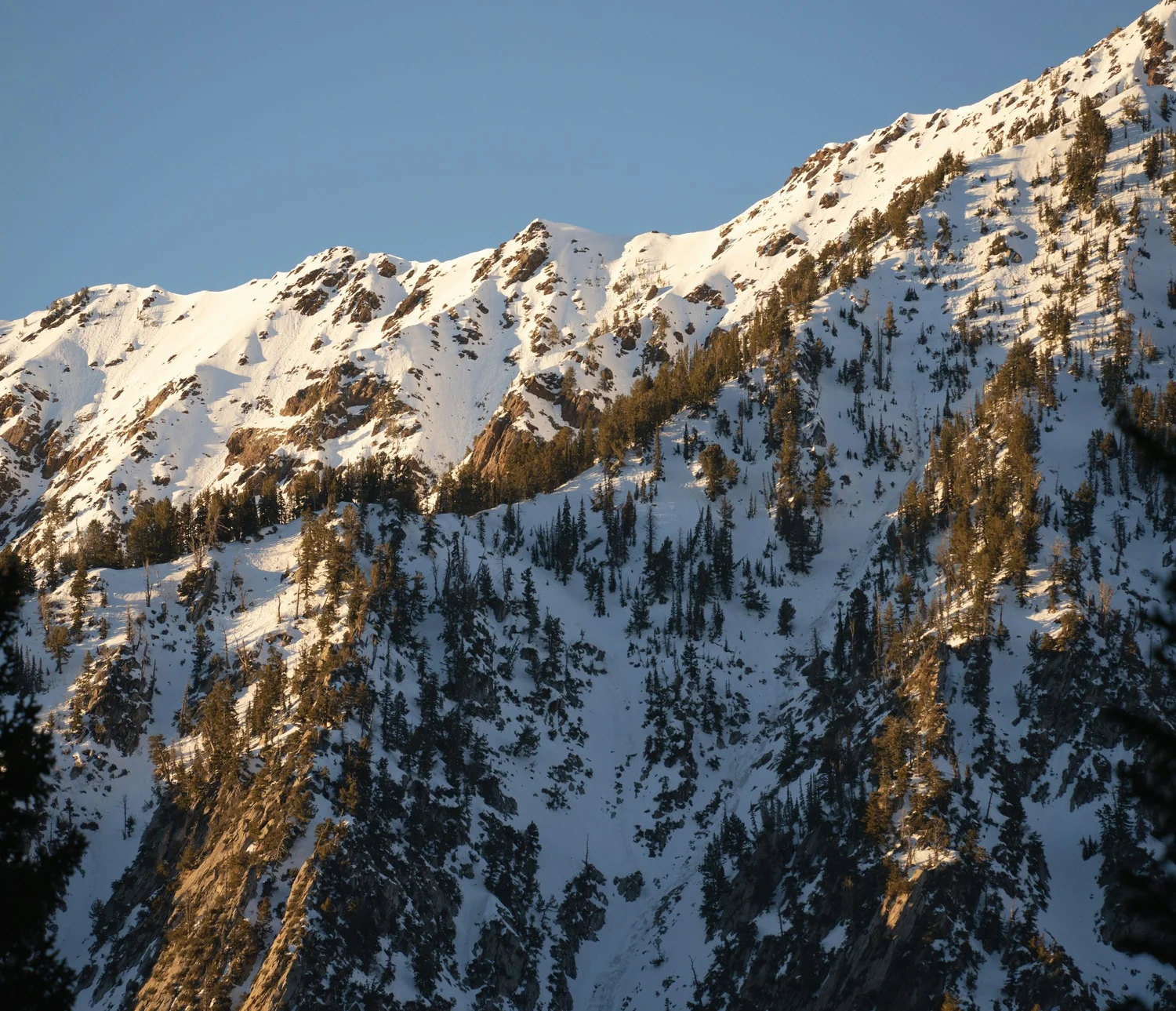
- Avalanches can start on steep slopes above you and run onto flatter ground below.
- Look beyond the trail under your feet: the route may cross an avalanche path or its runout, the area where moving snow spreads out and stops.
- Utah Avalanche Center’s Central Wasatch route ratings evaluate avalanche exposure separately from hiking difficulty or fitness.
- Study the entire route. Learn to recognize avalanche starting zones, paths, and runout areas, including slopes above and connected to your route. Do not assume that following existing tracks keeps you out of danger.
- Check conditions before every outing. Read the current Utah Avalanche Center forecast for the region, including the elevations and slope directions affected. Check land-manager notices and closures too.
- Get educated before you go. Start with UAC’s Know Before You Go eLearning and seek practical avalanche instruction suited to hiking or snowshoeing. An introductory course or an app alone does not establish that a route is safe.
- Choose another route when unsure. If you cannot identify avalanche terrain or assess your route’s exposure, choose an outing outside avalanche terrain and away from overhead avalanche slopes.
Read the forecast for your region
Start with the Utah Avalanche Center. Read the full forecast, including avalanche problems, recent activity, and how danger varies with elevation and slope direction. The overall danger rating is only one part of the information.
Check when it was issued and the area it covers. A missing or out-of-date forecast does not establish safe conditions. Regional forecasts describe general conditions; individual locations can differ.
Build skills before entering avalanche terrain
UAC offers a directory of classes and online learning. Its free Know Before You Go eLearning is an introduction or refresher before further training. Choose instruction appropriate to your activity and experience, and practice with your partners.
Companion rescue is time-critical. UAC’s emergency guidance emphasizes avalanche training, rescue practice, and learning first aid. Carry the appropriate rescue equipment and know how to use it; equipment alone does not provide the judgment to choose terrain.
Make uncertainty a reason to step back
If you cannot connect the forecast to your planned terrain, seek qualified instruction and choose an outing outside avalanche terrain. Do not treat a familiar summer trail as proof of suitable winter conditions.
For a backcountry emergency, call 9-1-1, explain the incident, and provide your location. Organized rescue may be delayed by weather or access. Prepare to protect the group while help is being arranged.
Keep building your skills
Explore the full guide collection for preparation, navigation, and seasonal topics.
Back to all guides